tablet

YouTube’s Compression Wars: How Machine Learning Saves Petabytes Daily

Every minute, more footage lands on YouTube than any human could watch in a lifetime. With creators uploading everything from long-form documentaries to chaotic livestreams, the platform faces an enormous challenge: storing and delivering all that video without breaking the internet. To pull it off, YouTube relies on a constantly evolving arsenal of machine learning–driven compression tools that shrink video files while preserving the viewing experience. The result? Petabytes saved daily and streaming that feels effortless.

Machine Learning as the New Compression Engineer

The first major shift in YouTube’s compression strategy came when traditional, rules-based codecs could no longer keep up with the flood of higher-resolution uploads. Machine learning models stepped in, learning to predict patterns in motion, color, and texture with uncanny accuracy. As creators investigate growth strategies such as understanding how to buy YouTube likes to boost engagement, YouTube’s engineers focus on making sure those videos stream smoothly, using AI to identify exactly which details can be compressed without noticeable quality loss. The smarter the model becomes, the more efficiently YouTube can deliver crisp video at a fraction of the data cost.

Adaptive Bitrate Streaming Gets Smarter

Adaptive bitrate streaming isn’t new, but machine learning is supercharging it. Instead of switching between fixed quality tiers, AI-driven systems can now analyze a viewer’s connection in real time and dynamically adjust compression settings. The result is fewer buffering wheels and smoother playback, even in unpredictable network environments. By understanding which parts of a video contain fast motion, intricate patterns, or low-light scenes, the system can distribute bits more intelligently than ever before.

Neural Codecs and the Future of Video Formats

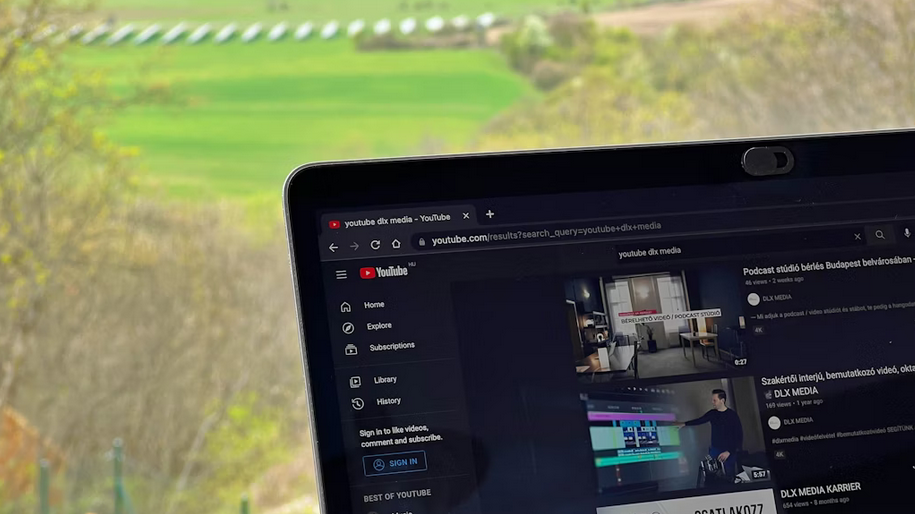
laptop

One of the most promising developments in video compression is the rise of neural codecs—AI models trained to reconstruct images and motion from much smaller data footprints. These codecs don’t rely solely on mathematical formulas; they generate video frames using learned patterns, making them flexible and shockingly efficient. Early tests suggest neural codecs could slash data usage even more dramatically than today’s cutting-edge formats. While deployment at YouTube’s scale takes time, the direction is clear: the next generation of video may be born from neural networks.

The Hidden Tradeoffs of Aggressive Compression

Of course, squeezing video down to microscopic sizes comes with tradeoffs. Overcompression can introduce smearing, blocky artifacts, and color banding. YouTube’s machine learning systems constantly walk a tightrope, balancing the pressure to conserve bandwidth with the need to maintain a quality viewers won’t complain about. Engineers use massive datasets of viewer feedback and watch behavior to fine-tune models, ensuring that compression becomes nearly invisible to the average user. The goal is a Goldilocks zone: small enough to save storage, clean enough to satisfy picky eyes.

Compression at Scale: Why Every Byte Matters

When you operate at YouTube’s scale, even tiny improvements in compression translate to enormous savings. A fraction of a percent more efficiency could mean millions of dollars’ worth of bandwidth reduced each year. Machine learning allows YouTube to iterate faster than ever, deploying new models that continually refine themselves. As global video consumption grows, this kind of optimization becomes not just an advantage but a necessity for sustainable streaming.

YouTube’s compression wars aren’t fought with flashy headlines but with quiet, powerful advances in machine learning. These algorithms enable the platform to deliver countless hours of video to billions of viewers without overwhelming the world’s infrastructure. As codecs evolve and neural networks mature, the videos we watch will become lighter, faster, and smarter—proving that sometimes the most important innovations are the ones happening behind the scenes.…
subscriber

Metaverse Marketing and the New Frontier of YouTube Subscribers

The metaverse is no longer just a buzzword—it’s becoming a living, breathing digital universe where brands, creators, and audiences meet in entirely new ways. For YouTubers, this emerging world represents both a challenge and a massive opportunity. As the internet evolves from static screens to shared 3D experiences, creators who understand metaverse marketing could be the ones leading the next wave of subscriber growth.

The Blend of Virtual Worlds and YouTube Growth

platform

The intersection of YouTube and the metaverse is where storytelling meets immersion. Instead of watching a flat video, imagine entering a virtual YouTube studio, chatting with creators as avatars, or experiencing a live concert inside a digital world. These experiences don’t just entertain—they forge stronger community bonds that translate into loyal fans and more subscribers. For creators looking to stand out early, understanding this fusion could make all the difference. And while some look for ways to grow quickly—like finding the best place to buy youtube subscribers—the real power will come from combining strategic marketing with authentic engagement in these new virtual spaces.

The Rise of Metaverse Branding

Brands are already moving into virtual spaces like Roblox, Fortnite, and Horizon Worlds to connect with younger, tech-savvy audiences. For YouTubers, this opens the door to collaborations and cross-platform visibility. A creator could host a product launch, a Q&A session, or a gaming event in the metaverse while streaming it simultaneously on YouTube. This blending of platforms doesn’t just expand reach—it transforms marketing into an interactive, participatory experience. As audiences crave immersion, metaverse marketing becomes a natural next step.

Virtual Influencers and Digital Identity

influencer

In the metaverse, identity becomes fluid. Avatars, AI-generated influencers, and digital twins are all part of the marketing mix. Some YouTubers are already experimenting with virtual versions of themselves—complete with 3D avatars that host videos, conduct interviews, or perform music sets. These virtual identities allow creators to engage audiences in fresh, futuristic ways. They also open up new storytelling opportunities, letting YouTubers exist in worlds limited only by imagination. The line between human and digital creator is blurring fast.

Immersive Audience Engagement

Traditional YouTube engagement—likes, comments, and subscriptions—might soon feel one-dimensional. The metaverse can turn passive viewers into active participants. Fans could attend meetups in creator-designed virtual environments, participate in story-driven adventures, or unlock exclusive digital collectibles. This deeper interaction not only enhances loyalty but also helps creators gather valuable data on audience behavior and preferences. It’s engagement on a whole new level, and it’s changing the way success is measured online.

Challenges and Considerations

meta

Despite the excitement, metaverse marketing comes with challenges. Not every audience is ready for VR or immersive digital spaces, and the technology still has accessibility barriers. Privacy, digital ownership, and platform compatibility are also ongoing concerns. Creators who jump in early will need to balance innovation with authenticity—making sure that virtual experiences enhance, rather than replace, the genuine human connection that made YouTube so powerful in the first place.

The Future of YouTube in the Metaverse

As metaverse technology matures, YouTube may evolve from a video platform into a full-fledged 3D social hub. Imagine creators building virtual channels where fans can step inside, interact, and explore content in real time. Subscriber growth will depend less on algorithms and more on experiences—how creators make viewers feel seen, connected, and part of something bigger. Those who master this blend of creativity and technology will define the next chapter of online entertainment.

Metaverse marketing is more than a trend—it’s a new frontier for creativity and connection. YouTube creators who embrace it early will find endless ways to engage audiences, tell stories, and grow their communities. Whether through immersive worlds, virtual collaborations, or interactive fan experiences, the metaverse is opening doors that traditional media could never imagine. The next wave of YouTube success won’t just happen on screens—it’ll unfold across entire digital worlds.…